0%

Choosing the right Agrispray Drone really starts with understanding your farm, not just flipping through pretty brochures. I mean, you’ve got steep orchard slopes, muddy soybean fields, tight vineyards—you can’t use the same drone for all these spots. Tank size is important, sure, but it’s just one piece of the puzzle. Things like flight time, nozzle control, terrain sensing, battery charging, and maintenance support can all hit or miss your daily workflow.

Michael Ott, the guy who founded Rantizo, puts it in a pretty simple way: “A drone should solve a farm problem, not create a new headache.” Honestly, that’s something worth keeping in mind. A drone that looks super powerful might catch your eye, but if its batteries are a pain to swap out or the software support is sketchy, that thing could end up being more hassle than it's worth. When you’re looking, ask yourself—how many hectares can this drone actually cover in real field conditions? Weather factors like wind, crop height, water access, and the distance to charging stations can make a big difference. Sometimes, tiny details become major delays.

And don’t forget safety and regulations—they should be the foundation of your comparisons. Make sure to check local aviation rules, what the labels say about applying chemicals, and what kind of training the operators need. Never assume that a drone with a bigger payload will automatically give you better results. Quality spraying depends on droplet size, the height and speed of the drone, weather conditions, and proper calibration. Even the most experienced operator can get caught off-guard by changing wind patterns.

Finding the perfect drone probably doesn’t exist—what matters is picking one that matches your crops, the size of your crew, your budget, and the service support in your area. Before you sign on the dotted line, it’s a smart move to ask for a demo in the field from companies like Rantizo, DJI Agriculture, or XAG. Watch how the drone works alongside your actual crop rows. Take note of how evenly it covers, how well it controls drift, how long refills take, and how much effort your operator needs to put in. Seeing is believing—real hands-on experience beats glossy specs every time.

How to Choose the Best Agrispray Drone for Your Farm?

What Is an Agrispray Drone and How Does It Work?

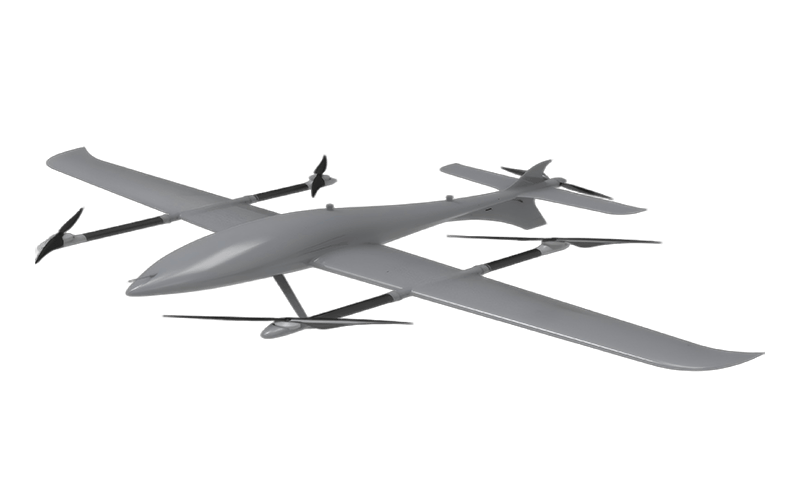
An agrispray drone is a battery-powered aircraft designed to apply liquid treatments over crops. It carries a tank, pump, flight controller, navigation system, and adjustable spray nozzles. The operator plans a route, sets application volume, and monitors altitude remotely. During flight, the pump feeds liquid through nozzles beneath the aircraft. Downward airflow can help move droplets into the crop canopy, but wind still changes coverage.

The technology is becoming commercially important. MarketsandMarkets estimated the agricultural drone market at about USD 1.3 billion in 2023, with strong growth expected through 2028. This growth reflects labor shortages and demand for precise field applications. The FAO reports that agriculture accounts for roughly 70% of global freshwater withdrawals, so reducing unnecessary spraying matters. Yet a drone does not automatically reduce chemical use. Nozzle size, droplet quality, flying height, and weather conditions decide the result.

When choosing an agrispray drone, match its tank capacity and flight time to field size. A larger tank may reduce refills, but it can increase battery demand and soil pressure. Look for stable positioning, terrain-following capability, flow control, and easy cleaning access. A 2023 review in the journal Drones highlighted the value of sensors, mapping, and variable-rate application for precision agriculture. Field experience suggests that calibration is often overlooked. It should not be. Even an advanced drone can produce uneven bands when software settings, speed, or nozzle spacing are wrong. Small test plots are wiser than immediate full-field spraying.

How to Assess Your Farm’s Spraying Requirements

Choosing the best agrispray drone starts with understanding your farm’s actual spraying requirements. Walk the fields and record crop type, growth stage, canopy density, and target pests. Flat wheat needs a different spray pattern from tall fruit trees. Mark wet zones, slopes, narrow rows, and obstacles. These details affect tank size, flight height, turning space, and battery demand. Do not estimate acreage from memory. Use a field map or measured boundary.

Define the treatment job, not just the farm size. Check the approved product label, local agricultural guidance, and operator requirements before planning any application. Note the required water volume, droplet size, coverage, and application timing. Wind matters. Measure it near the field, because calm mornings can change quickly. Keep people, livestock, waterways, and sensitive crops outside the planned buffer. An experienced operator also watches humidity, temperature, and evaporation risk. Spraying too fast may leave dry streaks beneath dense foliage.

Match the drone to your real workload. Calculate hectares per flight using payload, refill distance, battery cycles, and charging access. A large tank is not always better. Extra weight can reduce endurance and increase soil damage during emergency landings. Test a small area with water first. Inspect coverage on upper and lower leaves. Record what failed. Perhaps the planned flight height was too high, or the canopy needed another pass. That uncomfortable review is useful. Reliable decisions come from measured coverage, safe procedures, and repeatable field records.

Which Drone Specifications Matter Most for Farm Use?

How to Choose the Best Agrispray Drone for Your Farm?

Drone specifications matter more than appearance. USDA NASS reported 1.9 million U.S. farms in the 2022 Census of Agriculture. Their fields, crops, and terrain vary greatly. A small farm may need a 10-liter tank and compact folding arms. Larger fields often justify 20–30 liters, but weight increases quickly. Check the real spray rate, not only tank size. A useful target is consistent coverage at 8–12 liters per hectare, depending on the crop and label instructions. Droplet control also matters. Adjustable droplets help reduce drift and improve coverage.

Tips: Compare flight time with a full tank, not an empty battery. Look for at least 20 minutes of working endurance. RTK positioning can improve repeatable routes. Terrain-following sensors help around uneven ground. An IP rating above basic splash protection is valuable after early-morning spraying. Keep spare batteries and measure charging time. Small details matter.

The USDA data shows why one specification cannot fit every farm. A 2024 MarketsandMarkets report estimated the agricultural drone market could grow from about USD 1.5 billion to USD 3.6 billion by 2029. That growth reflects wider adoption, but market size does not guarantee field performance. I would test swath width, nozzle uniformity, and battery temperature on a small plot first. Bigger is not always better. I once assumed higher payload meant greater efficiency; refill time and soil access proved otherwise. Compare measured hectares per hour, water use, and missed strips before buying.

How to Compare Payload Capacity, Battery Life, and Coverage

How to Choose the Best Agrispray Drone for Your Farm?

Payload capacity should match your field size and daily spraying plan. A larger tank reduces refilling, but it also increases takeoff weight and battery demand. Check the useful payload, not only the advertised tank volume. Include liquid, battery, pump, and nozzle weight in your calculation. On uneven ground, a heavily loaded drone may respond more slowly. That matters near trees, power lines, and field edges. I once underestimated refill time. The tank size looked impressive, but the filling point was inconvenient.

Battery life must be tested under working conditions. Full payloads, wind, hills, and frequent climbing can reduce flight time. Ask for flight data with a loaded tank, not an empty aircraft. Compare minutes per battery, charging time, and the number of batteries needed for a normal workday. A spare battery can prevent long pauses. Still, battery figures are often optimistic. Your own field test is more reliable.

Tips: Calculate hectares covered per charge, not just flight minutes. Measure actual spray width, flow rate, and overlap during a small trial. Coverage depends on speed, nozzle choice, altitude, and wind. Keep records after each operation. If the drone covers less area than expected, adjust the plan before expanding the workload. Follow local agricultural and aviation requirements, maintain safe buffer zones, and avoid spraying in unsuitable weather.

How to Choose the Best Agrispray Drone for Your Farm?

Compare representative agrispray drone classes by payload capacity, usable flight time, and practical field coverage. Higher payload can reduce refill frequency, while longer battery life and wider coverage can improve daily operating efficiency.

Values are representative operating specifications for common agricultural spraying drone classes. Actual performance varies with liquid density, spray rate, terrain, wind, flight speed, battery condition, and refill logistics.

What Spraying Features Improve Precision and Crop Protection?

How to Choose the Best Agrispray Drone for Your Farm?

Spraying precision begins with droplet control, not tank size. Choose adjustable flow rates and interchangeable nozzles. These features help match droplets to crop height, wind, and target pests.

ASABE S572.1 classifies spray droplets by size, making nozzle selection more measurable. Smaller droplets can improve coverage. They may also drift more easily.

Terrain-following radar keeps the aircraft at a stable height above uneven fields. RTK positioning can improve route repeatability, but accuracy depends on correction signals and field conditions.

A reliable drone should also offer section control, automatic flow adjustment, and obstacle detection. These tools reduce missed rows and overlapping passes. Still, software is not infallible. Mud, dust, and weak signals can create uneven application.

Tips: Check nozzle charts before buying. Test coverage with water-sensitive paper. Inspect leaves under the canopy, not only the surface. Keep wind limits visible during every operation.

FAO’s AQUASTAT data indicates that agriculture uses about 70% of global freshwater withdrawals, so reducing chemical and water waste matters. The FAO State of Food and Agriculture 2022 also emphasizes that automation can improve resource efficiency, while requiring skilled operators.

That warning deserves attention. A high-end aircraft cannot replace calibration, weather checks, or local agronomic advice.

Choose logged flight data, clear alarms, and serviceable parts. Fancy features are not always useful.

How to Evaluate Safety, Regulations, Maintenance, and Support

Choosing the best agrispray drone starts with risk, not tank capacity. Check obstacle sensing, emergency landing, secure battery locks, and reliable spray shutoff. Ask for documented testing, not attractive demonstrations. Operators should inspect wind limits, drift control, protective equipment, and chemical-label requirements before every application.

Regulations vary by country, region, crop, and chemical. Confirm aircraft registration, pilot qualifications, operating zones, visual-line requirements, and agricultural application permits. A drone approved for mapping may not be approved for spraying. The FAO’s The State of Food and Agriculture 2022 reports that five of six farms worldwide are smaller than two hectares. That makes adjustable flow rates and accurate low-volume application especially valuable. However, bigger payloads are not automatically better. MarketsandMarkets’ 2024 Agricultural Drones report projects the sector to grow from about US$2.5 billion in 2024 to US$6.2 billion by 2029. Market growth does not prove field reliability.

Maintenance support can decide the purchase. Request a maintenance schedule covering pumps, filters, nozzles, motors, batteries, sensors, and calibration. Keep flight, cleaning, repair, and battery-cycle records. Ask how quickly replacement parts arrive during spraying season. Confirm technician training and remote troubleshooting hours. I would also test support before buying. Send a difficult question. Measure the reply. A polished sales answer is not technical support. My own checklist can still miss weather, terrain, or operator fatigue. Revisit it after real field work.

How to Choose the Best Agrispray Drone for Your Farm? - How to Evaluate Safety, Regulations, Maintenance, and Support

Use this evaluation matrix to compare agricultural spray drones objectively. Score each criterion from 1 to 5, then multiply the score by the suggested weight to identify the most suitable configuration for your farm.

Evaluation Area Selection Criterion Recommended Benchmark What to Verify Before Purchase Suggested Weight Target Score
Safety Obstacle detection and flight protection Multi-directional obstacle sensing, terrain-following capability, return-to-home, low-battery alerts, and emergency landing functions. Request a live demonstration in orchards, near power lines, and on uneven ground. Confirm whether sensors remain effective in low light, dust, and light rain. 15% 5 / 5
Safety Payload containment and chemical exposure control Leak-resistant tank, secure lid, sealed connectors, chemical-resistant hoses, and a controlled shut-off system. Inspect seals and hose connections. Confirm compatibility with the pesticides, fertilizers, adjuvants, and cleaning agents used on the farm. 10% 5 / 5
Safety Application accuracy and drift reduction Adjustable flow rate, electronically controlled spray output, calibrated nozzles, and swath control that can reduce unnecessary overlap. Review nozzle type, droplet-size options, calibration procedures, wind limitations, and field test results. Application settings must follow the pesticide label. 12% 5 / 5
Regulations Aircraft and operator compliance The aircraft, remote pilot, and operating method must comply with the aviation authority and agricultural rules in the country where the drone will be used. Check registration, pilot certification, operating permissions, insurance, remote-identification requirements, and any restrictions on autonomous flight. 15% 5 / 5
Regulations Agricultural chemical authorization Only products and application methods approved for aerial or drone use may be applied, subject to local label directions and buffer requirements. Confirm requirements with the local agriculture department or pesticide regulator. Check rules for waterways, schools, residential areas, pollinator protection, and wind speed. 12% 5 / 5
Regulations Operational limits and record keeping The operating plan should define maximum altitude, approved flight zones, weather limits, exclusion areas, incident procedures, and application records. Verify that the flight-control system can log location, time, altitude, speed, coverage, tank usage, and application parameters for audit purposes. 8% 5 / 5
Maintenance Cleaning and decontamination The spray system should be easy to flush, drain, inspect, and clean without exposing workers to concentrated chemical residue. Check whether the tank, pump, filters, hoses, and nozzles can be removed or flushed efficiently. Confirm the recommended cleaning agents and disposal procedure. 8% 5 / 5
Maintenance Routine service and replaceable parts Consumable parts such as nozzles, filters, seals, pumps, propellers, and landing gear should be replaceable with documented service intervals. Request the maintenance schedule, parts catalog, repair instructions, and average lead times for critical components before signing a purchase agreement. 8% 5 / 5
Maintenance Battery safety and lifecycle management Smart batteries should provide temperature, charge-cycle, voltage, and health information, with safe charging and storage procedures. Confirm charging time, recommended storage charge, transport rules, fire protection requirements, expected cycle life, and battery replacement cost. 7% 5 / 5
Support Training and onboarding The purchase should include practical training covering flight operations, spraying technique, calibration, chemical handling, emergency response, and data management. Ask whether training is delivered on the farm and whether refresher courses, operator assessments, and written standard operating procedures are available. 6% 4 / 5
Support Technical response and repair network Accessible technical support, documented response times, qualified repair technicians, and a local or regional parts supply. Obtain service-level commitments for grounded aircraft, battery faults, software problems, crash repairs, and urgent replacement parts. 5% 4 / 5
Farm Fit Coverage efficiency and workflow compatibility Choose tank capacity, battery quantity, charging setup, refill process, and flight endurance according to field size, terrain, crop type, and daily workload. Calculate productive hectares per hour using realistic refill, battery-swap, setup, cleaning, and weather-delay times rather than relying only on maximum flight duration. 4% 4 / 5
Recommended decision rule: prioritize compliance and safety first, then compare operating cost, uptime, application quality, and service support. 100% 45 / 45

Scoring guide: 5 = fully documented and verified; 4 = meets requirements with minor limitations; 3 = acceptable but requires additional controls; 2 = significant gaps; 1 = unsuitable or undocumented. Local aviation, pesticide, environmental, worker-safety, and privacy regulations always take precedence over this general checklist.

KEEL: How Modular Design Enables Ultra-Long Flight for Industrial Drone Operations

KEEL’s modular architecture addresses one of the most persistent challenges in industrial drone operations: maximizing flight time without sacrificing mission flexibility. By separating key systems—including the power module, payload interface, and flight-control components—operators can configure the aircraft for inspection, surveying, mapping, or infrastructure monitoring. This approach reduces unnecessary weight, simplifies maintenance, and enables rapid payload changes in the field. For demanding professional applications, modular design turns endurance from a fixed specification into an operational advantage.

Industry demand is moving in the same direction. Drone Industry Insights’ *Drone Market Report 2024* projects continued double-digit growth in commercial drone services through the end of the decade, driven largely by inspection, construction, energy, and logistics applications. Meanwhile, the FAA’s *2024 Aerospace Forecast* identifies sustained growth in commercial unmanned aircraft activity, increasing the need for reliable systems that can support longer and more repeatable missions. KEEL is engineered for this environment, combining long-range capability with adaptable configuration to help teams cover larger areas, reduce battery-change interruptions, and collect more data per deployment.

FAQS

What is an agrispray drone?

It is a battery-powered aircraft that applies liquid treatments over crops. It carries a tank, pump, controller, navigation system, and spray nozzles.

How does an agrispray drone apply liquid?

The operator plans a route, sets the application volume, and monitors altitude remotely. A pump sends liquid through nozzles beneath the aircraft.

Does downward airflow guarantee even crop coverage?

No. Downward airflow can move droplets into the canopy, but wind still changes coverage. Uneven bands remain possible.

What features improve spraying precision?

Adjustable flow rates and interchangeable nozzles help match droplets to crop height, wind, and target areas. Section control also reduces overlapping passes.

How important is terrain-following technology?

It helps maintain a stable height above uneven ground. Consistent height supports steadier coverage, but sensors can struggle with dust or weak signals.

Should smaller spray droplets always be used?

Not always. Smaller droplets may improve coverage, but wind can carry them away more easily. The right size depends on conditions.

How should a farm choose an agrispray drone?

Match tank capacity and flight time to field size. A larger tank reduces refills, but it can increase battery demand and soil pressure.

How can operators check whether spraying is even?

Test a small plot with water-sensitive paper. Inspect leaves beneath the canopy, not only the upper surface. Small tests are wiser.

Can advanced software replace skilled operation?

No. Calibration, weather checks, nozzle inspection, and local agronomic judgment still matter. Fancy features are not always useful.

What common mistake can reduce application quality?

Operators may overlook calibration. Incorrect speed, software settings, or nozzle spacing can create visible untreated and heavily treated bands.

Conclusion

Choosing the best Agrispray Drone begins with understanding how it uses GPS-guided flight, a liquid tank, pumps, and adjustable nozzles to distribute crop treatments evenly across fields. Farmers should first assess their spraying area, crop type, terrain, application frequency, and access to water or charging facilities. These factors help determine the appropriate tank size, flight range, operating speed, battery capacity, and coverage rate.

Important specifications include payload capacity, battery life, refill time, and resistance to dust or moisture. Precision features such as route planning, altitude control, flow-rate adjustment, obstacle detection, and variable spraying can improve coverage while reducing waste and protecting crops. Before purchasing, farmers should also review local operating requirements, training needs, safety functions, maintenance schedules, spare-part availability, and technical support. A suitable Agrispray Drone should match the farm’s practical workload, be simple to operate, and provide reliable performance throughout the growing season.

Sophia

Sophia

Sophia is a dedicated marketing professional with a deep expertise in UAV systems, specializing in the creation of repeatable, traceable, and compliant solutions. With a strong focus on integrated innovation across hardware, algorithms, and data operations, she plays a pivotal role in enhancing the......
Previous How to Choose Industrial UAVs for Global Procurement?